
Project Background
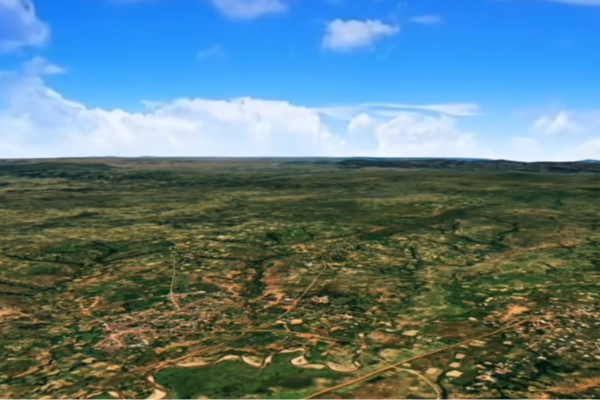
An international energy company took part in an oil & gas tender in an African country, with a target block totaling 6,400 km². The local government required bidders to participate without conducting any geological fieldwork. The client therefore needed to lock onto the most promising targets within a short time, "without any on-site geological work," to guide its subsequent investment decision.
Technical Approach
Deep-Explor®(Deep Exploration) adopted a phased workflow:
Phase 1: Satellite Remote Rapid Scan
- Full-coverage satellite remote-sensing scan of the 6,400 km² area
- Determination of oil & gas anomaly outlines and boundaries
- Rapid exclusion of low-potential areas
Phase 2: Satellite Remote Detailed Detection
- In-depth detection and data analysis of the anomaly zones delineated in Phase 1
- Breakdown of the large anomaly zones into 14 smaller anomaly zones
- Narrowing the 6,400 km² exploration area down to 327.7 km²
- Selection of the 5 most promising anomaly zones from the 14
Detection Results
| Stage | Outcome |
|---|---|
| Initial area | 6,400 km² |
| Anomaly area | 327.7 km² |
| High-potential targets | 5 |
| Timeline | 3 months |
The client then used this Deep Exploration report to lock onto the target block and successfully made the bid shortlist.
Client Value
- Completed in 3 months an area-screening task that traditional methods would take years to achieve
- Narrowed the exploration focus by 95% (6,400 → 327.7 km²)
- Provided reliable target evidence for locking onto the block and the bidding decision