
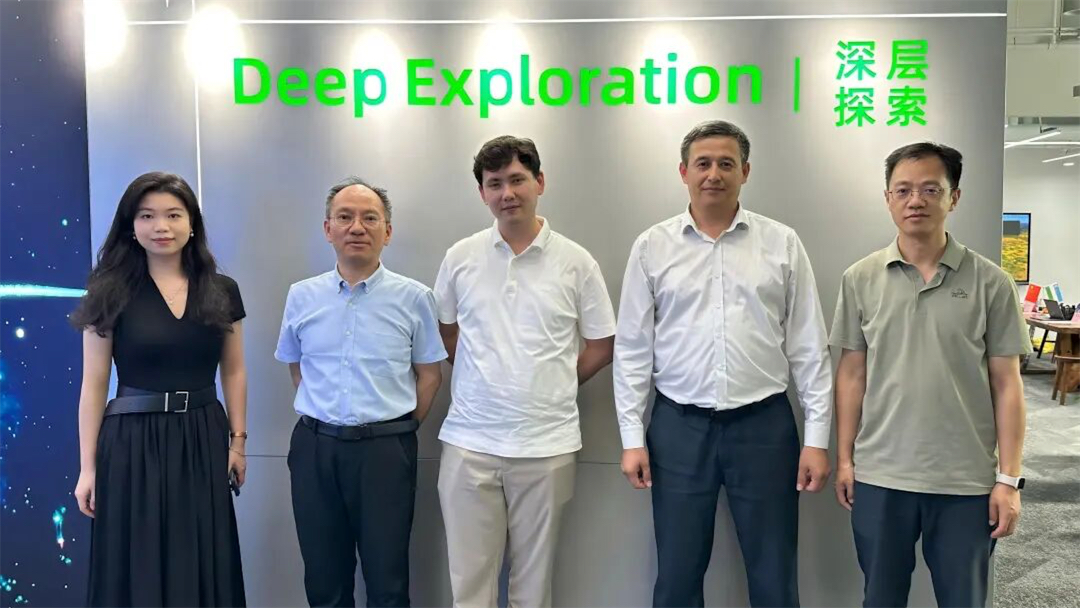
Beijing, July 29, 2026 — A delegation from the University of Geological Sciences (Tashkent, Republic of Uzbekistan) visited the Beijing headquarters of Deep Exploration (Beijing) Technology Co., Ltd. The two sides held in-depth discussions on AI-powered intelligent prospecting technology and its localized application in Uzbekistan.
At the exchange meeting, Deep Exploration's technical team systematically introduced the company's core technology system: multi-modal heterogeneous data AI intelligent prospecting technology, which acquires surface radiation-field information via satellite remote sensing and fuses geological, geophysical, and geochemical data for integrated interpretation, enabling intelligent identification and precise positioning of mineral targets.
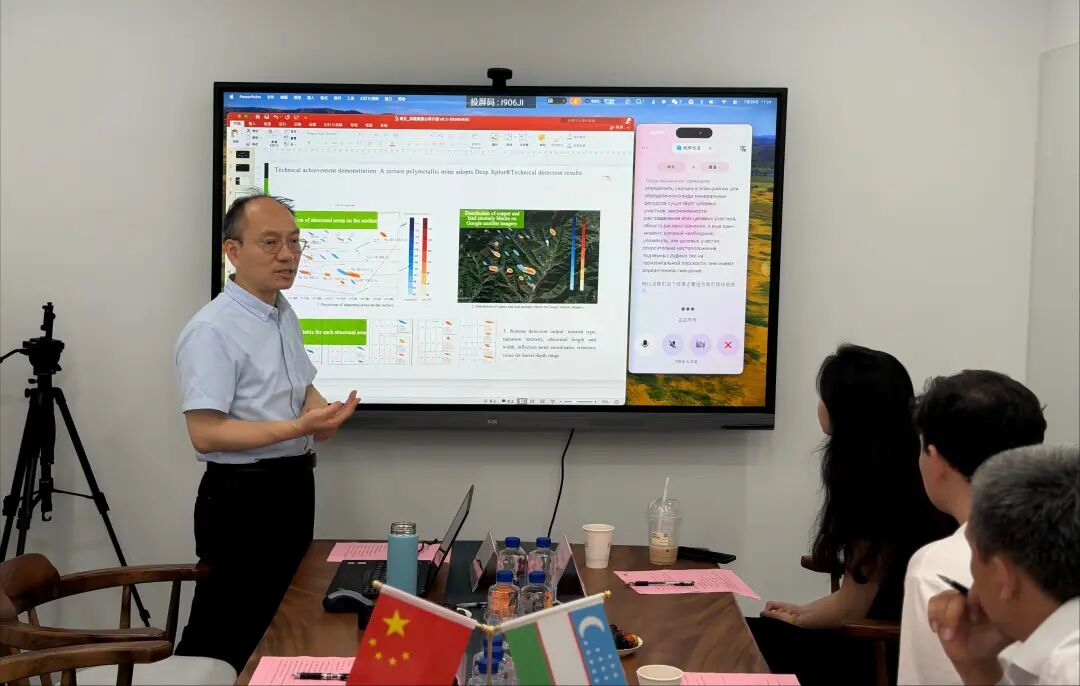
The team highlighted successful applications of this system in multiple representative scenarios:
- Hebei Province: target correction and optimization
- Ali Region, Xizang: target delineation and verification under high-altitude and complex terrain conditions
- Shanxi Province: coal-measure associated mineral identification and groundwater risk avoidance
- Kazakhstan: data support for cross-border mineral exploration projects
- West Africa (Guinea): remote AI intelligent gold detection services
These cases span oil & gas, critical minerals, and groundwater at home and abroad, fully validating the practical value of Deep Exploration's technology in mine evaluation, risk avoidance, and ore-proximal exploration.
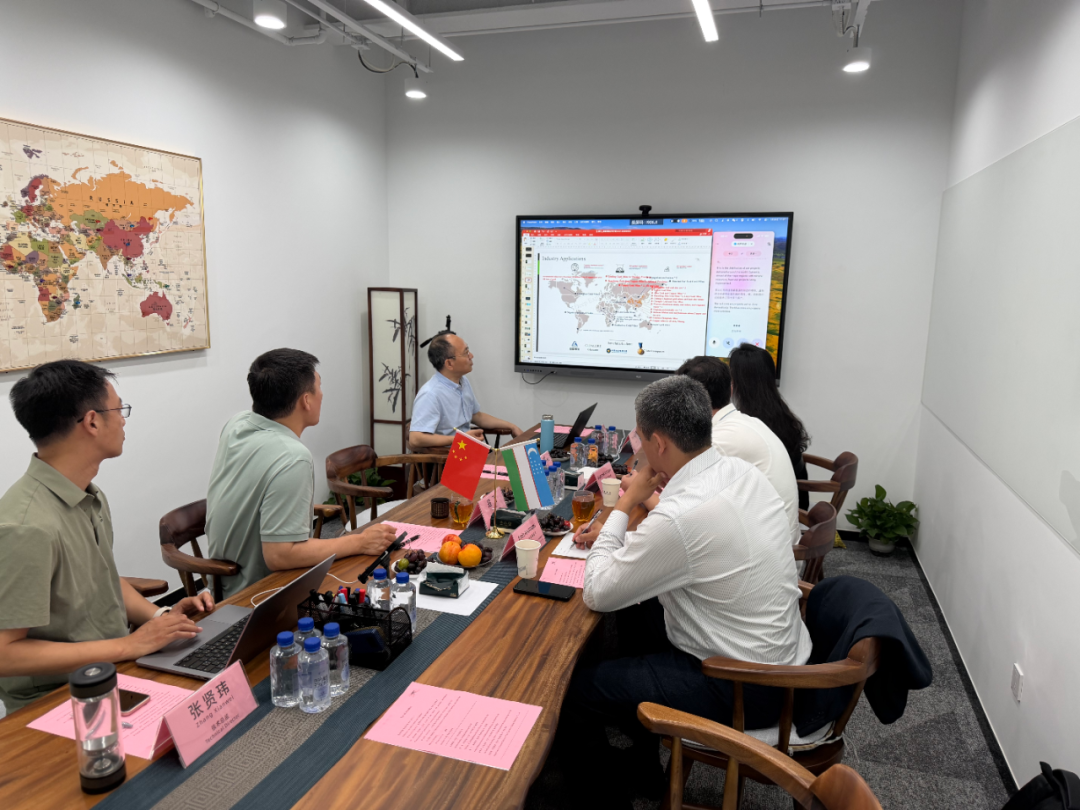
Dr. Diyorbek, a member of the Uzbekistan delegation, spoke highly of Deep Exploration's technical achievements and expressed strong interest in the company's capabilities. He detailed Uzbekistan's current mineral resources profile and exploration development status, and conveyed a willingness to introduce Deep Exploration's advanced remote AI detection technology into Uzbekistan's natural-resource exploration sector. He also indicated that he would actively communicate with mining authorities upon returning home to promote the next stage of substantive cooperation.
In addition, the two sides discussed frontier topics such as how traditional multi-modal and heterogeneous complex geological data can be normalized and digitally processed in the AI era, and reached consensus on continuing technical exchanges and cooperation in the future.
This visit lays a solid foundation for deeper cooperation between the two sides in scientific research and application of intelligent mineral-resource exploration.